The Three Cs: Choice, Children, Care

In which I go in circles pretending fictional characters have real moral obligations

Questions

Why did my undergrad philosophy degree not include Care Ethics?

Why does being cared for feel so great in some situations, and so diminishing in others?

How does choice, based on our own wants needs values, rub up against our ethical duties to others, especially those we care about?
Thinking

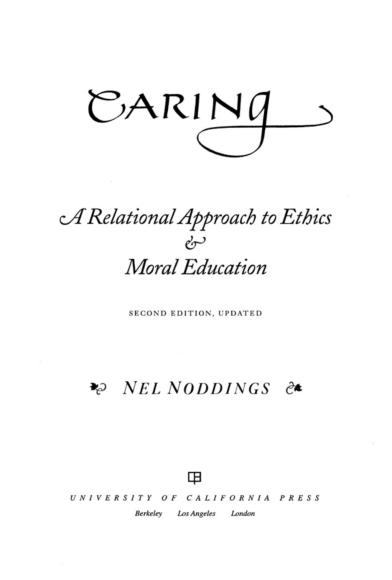
Care ethics says that how we should behave to someone in a given situation isn’t based on moral rules or maxims, but on our relation to them and the context of the situation.

A lot of this feels instinctive, and if it’s how we’re already behaving, do we need to spell it out? But there’s something interesting when it gets to the point of being the one cared for. This is two-way morality, for once.

Receiving care from someone else can be beautiful, can be frustrating, can be infantilising. So much depends on the spirit in which care is given.

It feels so obvious that so many interpersonal conflicts come from a mismatch between what the person caring wants to give, and what the person being cared for wants to receive.

A colleague once told me to wear gloves when I sat outside to eat lunch in London. I said I didn’t do that, because then I couldn’t use my kindle. She said, ‘There’s just no helping you sometimes.’

And I remember so clearly thinking: I don’t need your help with how to eat lunch. She wanted to give me advice, and wanted me to be thankful, and our relationship was dependent on my receiving her advice gratefully.

There is pressure and guilt associated with being on the receiving end of care.

Now, you might be wondering, what on earth does this have to do with Bound in Shallows, this novel I’m supposedly writing?

Because something interesting happens when we care about someone deeply and want to give them whatever they want or need, and then it turns out that what they want or need goes against our very self.

And it happens all the time!

In the novel, it’s about a baby. Pearl, the main character, doesn’t want to have kids, but her partners do. She wants more than anything to be their partner and to give them what they want. But she also has very real concerns and fears about having children. What should she do?

Under a utilitarian ethic, she should probably go along with it, because two happy people outweigh one happy person. And how happy could she even be if she denied them something they want so much? Everyone would be miserable. So just have the baby, and shut up.

Under virtue ethics she probably should as well. There is something wonderfully generous about putting one’s own needs aside for the sake of someone else. Surely that’s what a virtuous person would do?

I’m not sure about deontology, because honestly it always felt like the rules could change at any time, and how would you get a rule this specific anyway? Hence the need for care ethics in the first place,, I guess.

It’s not like it’s an easy decision under care ethics either, but at least in that case the people on the receiving end – her partners – get a say in what the right thing to do is. Morality suddenly goes both ways, unlike in thought experiments which are full of passive figures receiving moral (or immoral) actions. Do they gratefully receive her sacrifice, knowing that it has shifted who she is on a fundamental level? Could they even love her after that?

You can probably tell that I don’t know how this novel is going to end. I have to figure that out over the next few months. Thoughts?

One response to “The Three Cs: Choice, Children, Care”

  1. Great and interesting questions Ali. One could go on for a long time, chewing these over. Perhaps over a whiskey or big pot of tea. I’ll save my comments on the first question for last because they are a bit negative about Noddings whereas I think she has done the study of ethics a great service by placing the human relationship of caring at the centre and beginning of ethical theorising.

    Re Q2. When I did nursing and many times during my public service career, we had to consider ethical issues and look at various ethical frameworks. For example, as a nurse we had to constantly deal with how to balance various goods eg a person’s autonomy versus their safety. One idea common at the time was ‘the dignity of risk’ which was about tipping the balance towards letting people do things that gave them a sense of dignity and autonomy even though those activities contained risks to their safety. For example, letting someone walk to their shower because that gave a sense of autonomy and dignity versus the risk of them falling and breaking a hip. Or letting them eat solid food if that was their preference rather than eating puree even though their risk of choking was much greater. Nurses make these decisions every day. It is a professional ‘caring’ relationship but I can say quite honestly that I often felt emotionally attached to the people i was caring for. The closeness and intimacy of what you do with another human as a nurse immediately creates a human bond of empathy. I don’t think Noddings influenced nursing ethics as I studied it but maybe she was influential and i just wasn’t aware of her. Or maybe she has influenced nursing ethics since. Its been a while.

    I think being cared for becomes ‘diminishing’ when the objective of the carer is not to care for another but to meet the needs of the person providing the care. As suggested above, there is a lot to the ethics of caring and the choices of a carer cannot be boiled down to one primary value.

    On the third question, which is a way of framing Pearl’s baby question, I don’t think there is a single ethical theory provides an answer. The reason for this, I think, is that the consequences of the decision are unknown. She may decide to proceed and then not succeed with all the attendant consequences that would have. Pearl or the baby may die or be severely disabled by the choice. Disability could be framed as a very negative outcome but i think people with disabilities and their parents/carers would rightly question the value criteria that lead to a negative conclusion. Pearl may find that she loves pregnancy and the child and the act of mothering, contrary to her expectations, while her partners my be much less enamored with the child once the realities of care impact their sleep and freedom etc. And the saying ‘it takes a village to raise a child’ can be unpacked to recognise that there is a whole society with an interest in the wellbeing of future generations. Hence we pay taxes to support schools and hospitals and vaccinations etc etc. Do ‘care ethics’ capture the contingent nature of a decision made now for which there are so many possible outcomes including, of course, love, heartache, estrangement, bonding, identity? Pearl may just not want to take the risk or compromise her own autonomy (there is a huge opportunity cost to having children) but that, too, has an unknown long-term set of consequences. We don’t know the future of any course of action we take.

    So, back to question 1 – I’ve only looked at an AI summary of Noddings and your brief comments but there are two primary concerns I have. First is the logical problem of rejecting universal ethical principles in favour of an ethics based on immediate, close, intimate relationships which have care at the centre. The logical problem is that this is as much a universal ethical principle as Kant’s categorical imperative. The second problem, is that if ethics is founded on relationships and the mother-child relationship is its exemplar, does this mean that all of us who are not mothers have to put up with being second-class ethical beings? Will Pearl be a diminished ethical being if she chooses not to have a child even though she makes this choice after deep ethical contemplation? These criticisms may be unfair to Noddings. I hope so. I’d like to think that she would get rid of these philosophical difficulties quickly.

    Liked by 1 person

Leave a reply to Dr Brendan JJ Gibson Cancel reply