In which I go in circles pretending fictional characters have real moral obligations
Questions
Why did my undergrad philosophy degree not include Care Ethics?
Why does being cared for feel so great in some situations, and so diminishing in others?
How does choice, based on our own wants needs values, rub up against our ethical duties to others, especially those we care about?
Thinking
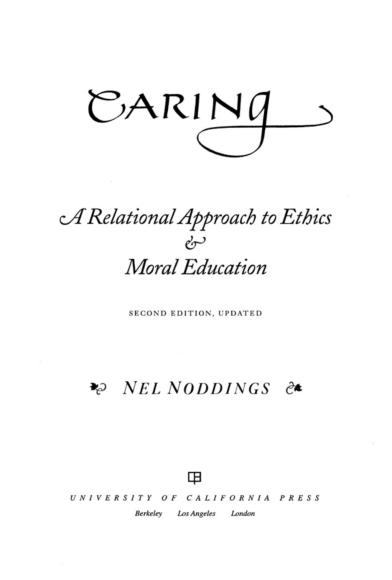
Care ethics says that how we should behave to someone in a given situation isn’t based on moral rules or maxims, but on our relation to them and the context of the situation.
A lot of this feels instinctive, and if it’s how we’re already behaving, do we need to spell it out? But there’s something interesting when it gets to the point of being the one cared for. This is two-way morality, for once.
Receiving care from someone else can be beautiful, can be frustrating, can be infantilising. So much depends on the spirit in which care is given.
It feels so obvious that so many interpersonal conflicts come from a mismatch between what the person caring wants to give, and what the person being cared for wants to receive.
A colleague once told me to wear gloves when I sat outside to eat lunch in London. I said I didn’t do that, because then I couldn’t use my kindle. She said, ‘There’s just no helping you sometimes.’
And I remember so clearly thinking: I don’t need your help with how to eat lunch. She wanted to give me advice, and wanted me to be thankful, and our relationship was dependent on my receiving her advice gratefully.
There is pressure and guilt associated with being on the receiving end of care.
Now, you might be wondering, what on earth does this have to do with Bound in Shallows, this novel I’m supposedly writing?
Because something interesting happens when we care about someone deeply and want to give them whatever they want or need, and then it turns out that what they want or need goes against our very self.
And it happens all the time!
In the novel, it’s about a baby. Pearl, the main character, doesn’t want to have kids, but her partners do. She wants more than anything to be their partner and to give them what they want. But she also has very real concerns and fears about having children. What should she do?
Under a utilitarian ethic, she should probably go along with it, because two happy people outweigh one happy person. And how happy could she even be if she denied them something they want so much? Everyone would be miserable. So just have the baby, and shut up.
Under virtue ethics she probably should as well. There is something wonderfully generous about putting one’s own needs aside for the sake of someone else. Surely that’s what a virtuous person would do?
I’m not sure about deontology, because honestly it always felt like the rules could change at any time, and how would you get a rule this specific anyway? Hence the need for care ethics in the first place,, I guess.
It’s not like it’s an easy decision under care ethics either, but at least in that case the people on the receiving end – her partners – get a say in what the right thing to do is. Morality suddenly goes both ways, unlike in thought experiments which are full of passive figures receiving moral (or immoral) actions. Do they gratefully receive her sacrifice, knowing that it has shifted who she is on a fundamental level? Could they even love her after that?
You can probably tell that I don’t know how this novel is going to end. I have to figure that out over the next few months. Thoughts?

 Alison Theresa
Leave a comment